

Why are horror films so popular worldwide? From blockbuster theatrical releases to viral streaming hits, horror films attract millions of viewers year after year. Part of their appeal lies in the unique emotional experience they deliver: fear, excitement, and the thrill of confronting the unknown. But what sets a horror film apart from other movie genres? At their core, these films aim to scare, thrill, and explore fundamental human fears, using storytelling and cinematic techniques that intensify emotional engagement. This article unpacks the genre’s definition, history, key elements, and cultural influence while helping readers understand why horror films remain a compelling part of global cinema.
Table of Contents
What Is a Horror Film?
A horror film is a genre of movie designed to scare, unsettle, or thrill the audience by portraying frightening situations, supernatural events, or psychological tension. It often includes eerie atmospheres, suspenseful plots, jump scares, and terrifying characters like ghosts, monsters, or killers. Horror films aim to evoke strong emotional reactions while exploring human fears and anxieties.
History and Evolution of Horror Films
It traces their roots back to early cinema and German Expressionist influences in the 1910s and 1920s. Films like The Cabinet of Dr. Caligari (1920) and Nosferatu (1922) helped define visual styles that inspired shadows, contrast, and eerie framing in later horror movies. By the 1930s, classics such as Dracula and Frankenstein brought gothic horror to mainstream audiences.
- Golden Age (1930s–1950s): Universal Studios introduced iconic monsters that became cultural staples.
- Modern Horror (1970s–1980s): Films like Halloween reshaped the genre with slasher tropes and suspenseful pacing.
- Psychological Horror & Variations: Works like Night of the Living Dead and later The Exorcist explored deeper societal fears and genre hybridity
Key Elements of a Horror Film
A horror film blends several cinematic tools to provoke fear:
- Atmosphere & Cinematography: Dim lighting, shadow play, and unexpected camera angles enhance unease.
- Sound & Music: Creaking scores, silence, or sudden loud noises amplify tension and trigger emotional responses.
- Characters & Villains: From supernatural beings to deranged humans, these figures anchor the sense of danger.
- Plot Devices: Suspense, isolation, and unexpected twists are used to keep audiences on edge.
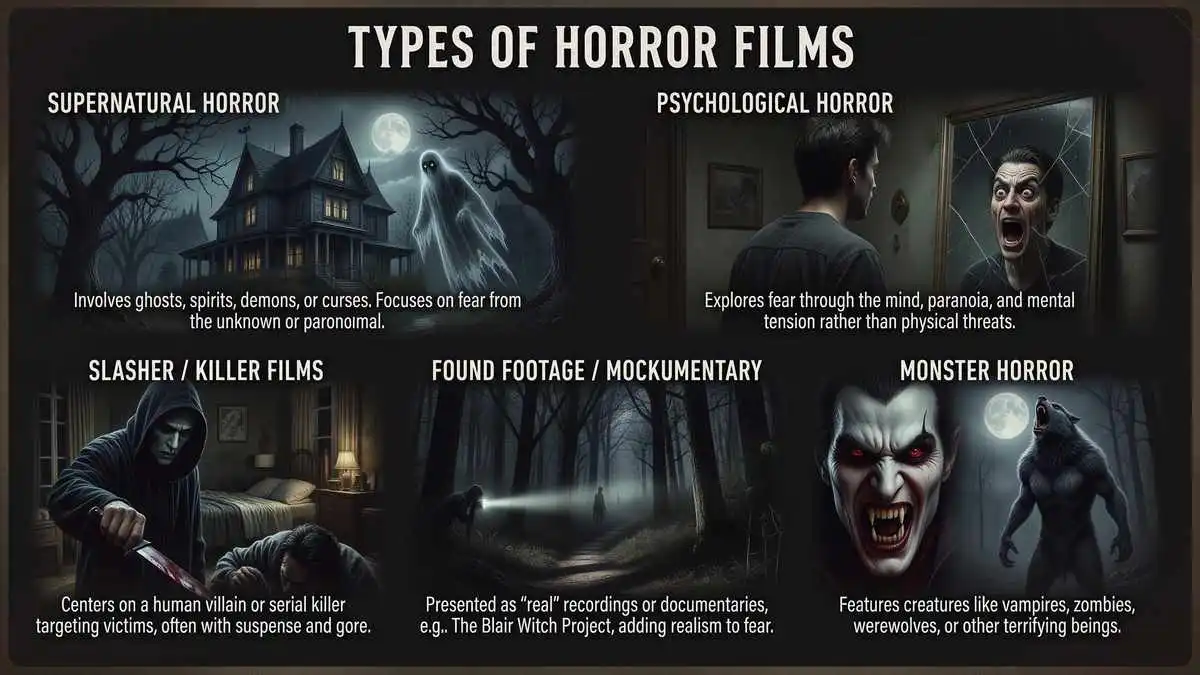
Types of Horror Films
| Type of Horror Film | Description / Key Features |
| Supernatural Horror | Involves ghosts, spirits, demons, or curses. Focuses on fear from the unknown or paranormal. |
| Psychological Horror | Explores fear through the mind, paranoia, and mental tension rather than physical threats. |
| Slasher/Killer Films | Centers on a human villain or serial killer targeting victims, often with suspense and gore. |
| Monster Horror | Features creatures like vampires, zombies, werewolves, or other terrifying beings. |
| Found Footage / Mockumentary | Presented as “real” recordings or documentaries, e.g., The Blair Witch Project, adding realism to fear. |
Why Do People Love Horror Films?
Psychologically, horror films appeal because they allow people to experience fear safely, triggering adrenaline and excitement without real danger. Some researchers argue that this can help viewers process anxiety or stress within a controlled environment.
Socially, it can reflect cultural anxieties and taboos, allowing audiences to confront fears through metaphor and narrative. Watching horror films with others also builds a shared experience, from group reactions to collective screams and laughter.
Which horror films and directors shaped the genre?
- Psycho revolutionized psychological terror and suspense.
- Night of the Living Dead redefined zombies and independent horror storytelling.
- The Texas Chain Saw Massacre influenced realistic, gritty horror aesthetics.
Directors like Alfred Hitchcock, John Carpenter, Jordan Peele, and Ari Aster have shaped horror’s evolution by pushing narrative boundaries and introducing new styles
Impact of Horror Films
It influences culture by reflecting societal fears and taboos while shaping pop culture through iconic characters, memes, and fan communities. Psychologically, they provide a safe way to experience fear, adrenaline, and thrill. The genre also impacts the film industry, driving box office success and inspiring innovative storytelling across global cinema.
FAQs
1. Are horror films bad for mental health?
Not inherently; many people use them to safely manage fear and stress.
2. Why do people enjoy scary movies?
The thrill, adrenaline, and emotional release from fear make them appealing.
3. What is the scariest horror film ever made?
Opinions vary, but classics like Psycho and Night of the Living Dead remain influential.
Conclusion
Horror films remain a distinct and dynamic genre because they tap into universal fears, combine powerful storytelling techniques, and continually evolve with cultural and technological shifts. Their ability to evoke intense emotion while offering safety in fiction ensures that horror films will stay relevant and compelling for global audiences.