


Is gold investment really still a safe investment in 2026? Many investors are asking this question as inflation rates fluctuate and global markets experience uncertainty. Gold has historically been a safe-haven asset, meaning it can protect wealth during financial instability. According to the World Gold Council, global gold demand in 2025 increased by nearly 10% due to rising economic volatility (World Gold Council, 2025).
Even personally, I’ve seen how a small portion of a portfolio in gold can cushion losses during stock market dips. With the economy evolving, gold investment remains relevant for preserving purchasing power and providing diversification.
Table of Contents
Understanding Gold Investment: More than Just Buying Bars
Gold investment today is far more than buying bars or jewelry. There are several options, each with unique advantages and drawbacks:
1. Physical Gold: Coins, bars, and jewelry are tangible assets.
Pros: Direct ownership, long-term security, hedge against inflation.
Cons: Storage costs, risk of theft, less liquidity.
2. Digital/Fractional Gold Investment: Platforms allow you to buy portions of gold without holding it physically.
Pros: Affordable, flexible, and easy to trade.
Cons: Dependent on platform security, fees may apply.
3. Gold ETFs & Mutual Funds: Financial products that track gold prices.
Pros: Highly liquid, convenient, low storage hassle.
Cons: No physical ownership, market risk exists.
A common question I encounter is, “Is physical gold really safer than digital gold?” While tangible gold is secure in hand, fractional or digital gold provides flexibility and accessibility for small investors, showing that both methods have unique value depending on your goals.
Will You Check This Article: Smart Tax Moves Small Business Owners Grow With
Why 2026 Could Be a Game-Changer for Investors
Economic trends in 2026 suggest gold may outperform due to rising inflation, currency fluctuations, and geopolitical uncertainties. Global events like trade tensions or economic slowdowns often push investors toward gold as a safe-haven asset. Additionally, technological platforms and fractional gold options make it easier for small investors to participate, potentially boosting demand and returns.
Fractional Gold Investment: Affordable, Flexible, and Profitable
Fractional gold allows investors to buy small portions of gold instead of full bars or coins, making it accessible for beginners. It offers flexibility to buy or sell anytime and reduces storage concerns, while still providing the benefits of gold ownership. This approach enables gradual wealth building without a large upfront investment.
Key Strategies to Maximize Gold Investment Returns
Maximizing returns from gold investment requires strategic planning. Here are some practical approaches:
- Dollar-Cost Averaging: Buying small amounts regularly helps reduce market timing risk.
- Long-Term Holding: Gold is generally better for wealth preservation over several years rather than short-term gains.
- Diversification: Combining gold with stocks, bonds, and real estate spreads risk.
- Monitor Market Trends: Regularly track prices and economic indicators to make informed buy/sell decisions.
In my experience, using these strategies consistently has led to steady portfolio growth, even during volatile market periods.
Risks and Challenges of Gold Investment
While gold is often seen as a safe investment, it comes with risks like price volatility, storage costs for physical gold, and potential scams from unreliable sellers. Investors must carefully choose trustworthy platforms or dealers and stay informed about market trends to minimize losses.
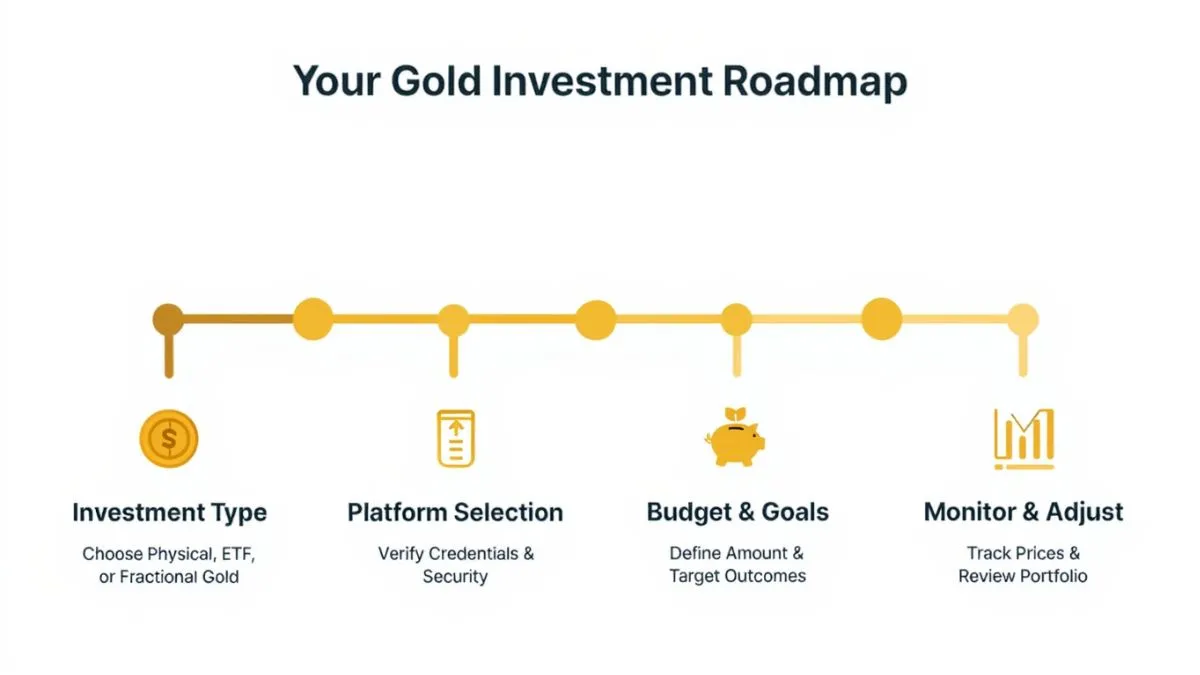
How to Start Your Gold Investment Journey
Tools and Resources for Gold Investors
Reliable tools make investing easier:
- Price Tracking Apps: Kitco, Investing.com, Gold Price Live
- Investment Platforms: Reputable fractional gold providers with secure storage
- Market News Sources: Financial Times, Bloomberg, World Gold Council reports
FAQs
1. Can I invest in gold through a retirement account?
Yes, some retirement accounts like IRAs in certain countries allow gold investments, usually through approved ETFs or physical gold stored by custodians.
2. How do taxes affect gold investment profits?
Capital gains from selling gold may be taxed differently depending on your country. Physical gold, ETFs, and mutual funds can have varying tax implications.
3. What is the difference between sovereign gold bonds and traditional gold?
Sovereign gold bonds are government-issued certificates that offer interest and track gold prices, combining investment returns with the safety of government backing.
Conclusion:
Gold investment remains a cornerstone for building and protecting wealth, especially in uncertain times like 2026. Whether you choose physical, fractional, or ETF gold, the key is to understand your investment type, diversify strategically, and remain informed about market trends.
Will you let gold secure your financial future in 2026? Taking small, informed steps now can make a significant difference in long-term financial stability.